Preloader

DESIGNER IN DIASPORA

Designing my way back home.

Maugana’i Gardens · Fusi Safata, Samoa

A return to land, family and possibility.

For a long time, I felt unsettled by systems that were not built around the wellbeing of people or the Earth. Permaculture was the first system that made deep, whole sense to me. It gave me a language for what I had already been feeling—and a way to recognise what my dad had been holding through his relationship with the land.

The house was not part of our original plan for regenerating the soil and developing the gardens. But it is where my dad was born, where his parents began their family, and where their story remains in the land.

Regenerating the land also came to mean preserving the story held within it.

The intention

The Vision

The Maugana’i Permaculture Project envisions transforming a once-degraded piece of ancestral land in Samoa into a thriving permaculture garden and learning site that embodies ecological regeneration, cultural reconnection, and community resilience. Rooted in a powerful narrative of return and healing, the project is led by Monique Sarah Bell in collaboration with her father, Maugana’i Eneliko Bell. Together, they are regenerating the 1.3-acre family homestead site—the heart of the project—with plans to eventually expand across their full 30 acres of ancestral land.

Our vision is to demonstrate how blending permaculture principles with Indigenous knowledge can heal the land, empower local communities, and inspire a broader movement of regenerative practice. Ultimately, Maugana’i will serve as a beacon of hope—showcasing how restoring one small piece of land can sow the seeds of a more sustainable and resilient future for Samoa and the Pacific.

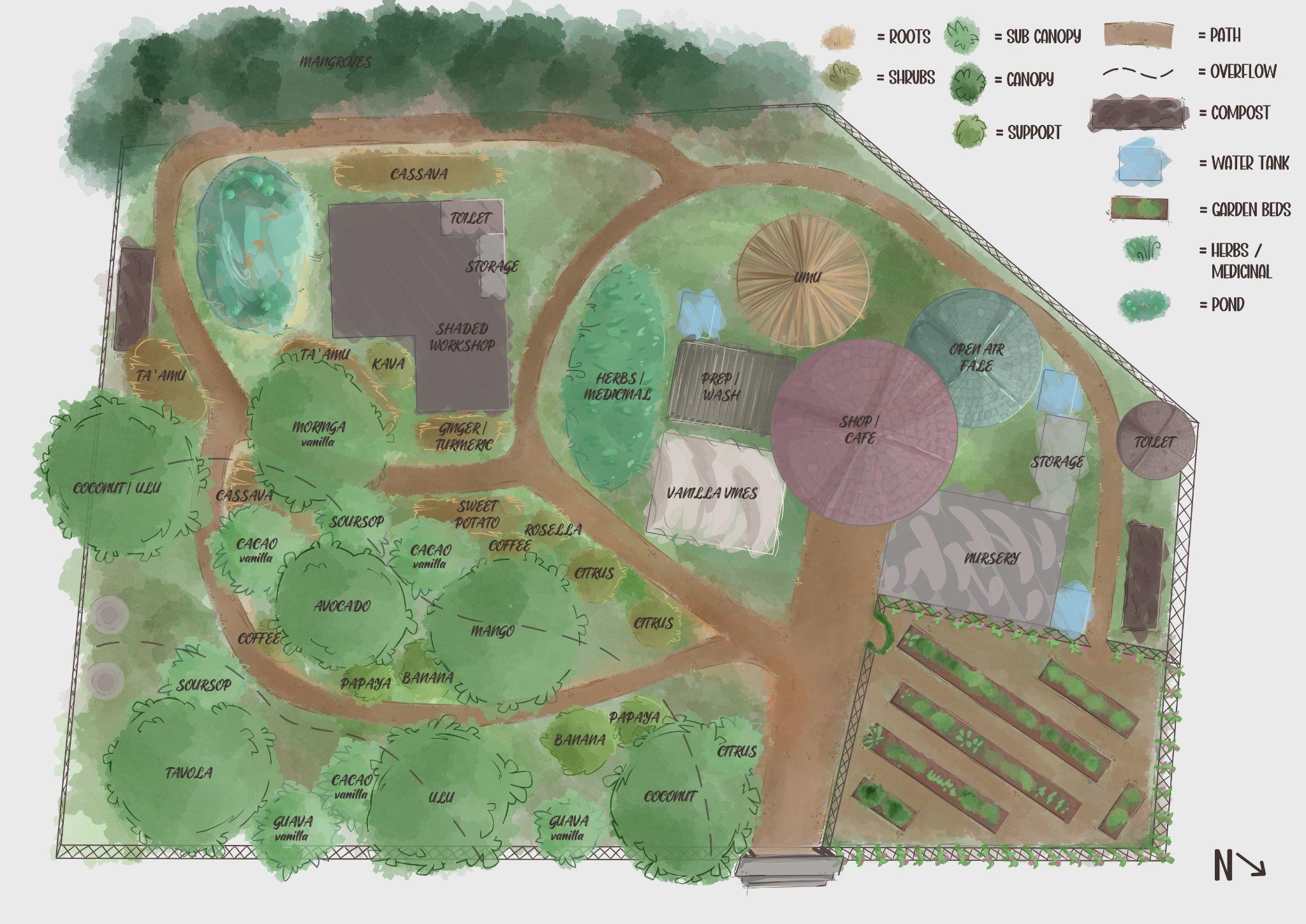
Original detailed Maugana’i Gardens site plan

The first stage

What happens first

The project is designed to move in practical stages. Each step prepares the conditions for the next, so the work can be tested, measured and built carefully on the ground.

01

Make the home base safer

Finish the family home and address the flooding around it, including drainage, gutters and water management. This creates a safe, reliable base for family, workers and future project activity.

First actions: complete essential house work, plan runoff, improve access and establish basic water infrastructure.

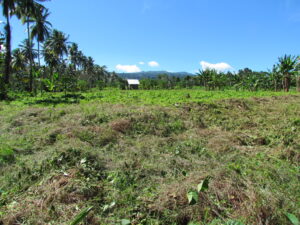
Fusi Uta property and house setting

02

Prepare the 1.3-acre site

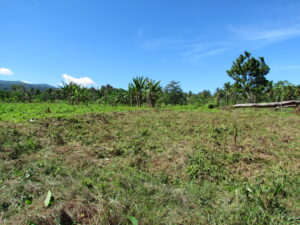
Clear the overgrowth and debris, reopen practical pathways and work around the old hospital foundations and existing vegetation rather than flattening the site.

First actions: complete soil and water testing, mark contours, identify useful biomass and prepare the first zones for planting.

Fusi Uta land

03

Establish the growing systems

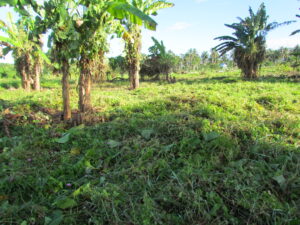
Begin with raised beds, hot compost bays, a nursery and propagation space, water systems and the first food-forest plantings.

First actions: build with available materials, plant in stages and record the results for future expansion.

Plants growing at Fusi Uta

The design in practice

Restoring the land

The first stage is a 1.3-acre demonstration site in Fusi Safata, Upolu. It is a connected site plan that brings food production, water management, family use and coastal care into one working system.

A staged site plan

The plan starts with raised garden beds, nursery and propagation space, composting, food-forest planting and practical paths between them. Existing vegetation, old foundations and the coastal edge remain part of the site story.

Detailed Maugana’i Gardens site plan

Water, soil and food together

The land slopes toward the coast, so the design uses contours, swales, berms, groundcover, mulch and compost to slow water, rebuild soil and reduce erosion. Over time, the site can include rainwater storage, a pond or wetland element, food-forest layers, communal learning spaces and a protected coastal buffer.

“The land itself becomes a teacher.”

— Maugana’i family vision

A project carried by care

Real family, real place, real work.

In Fusi Safata, Upolu, Samoa, my family is working to restore an important family home and begin the first on-ground stage of Maugana’i Gardens—a permaculture project shaped by my dad’s lifelong relationship with the land and my work as a designer and organiser.

Learning permaculture has deepened my understanding of, and love for, Indigenous ways of knowing—ways of seeing and living that honour relationship, care and reciprocity with the land.

Turning the plan into action

What support makes possible now

We need support now because the project is ready to move from planning into real on-ground action. Every contribution helps move it forward in practical ways.

Funds will support essential house work, flood mitigation and drainage, clearing and pathways, labour and site organisation, nursery and market-garden set-up, soil testing, site preparation, travel and coordination.

How your contribution helps

$50–$100 helps with tools, seedlings, basic materials or soil testing.

$250–$500 helps support clearing, pathways, drainage or nursery materials.

$1,000+ helps fund larger restoration, labour and implementation costs for the house and first garden infrastructure.

All funds go directly towards practical restoration and implementation costs.

The longer view

A living model for resilience

Maugana’i Gardens begins with one family, one site and a commitment to learn by doing. Over time, the work will document what helps restore soil, grow food, protect water, strengthen family knowledge and create a more resilient future for Samoa and the Pacific.

The next step

Help bring the first stage to life.

Every contribution helps create a safer home base, prepare the land and begin the growing systems that will make Maugana’i Gardens real—not just as a plan, but as a living place for food, learning, family and future generations.

Tea project

Southwind Tea

Custom herbal tea blends are the starting point, with botanical tea ideas still being explored.

Beekeeping & pollination

Taste and See Honey

Bee activity at the Samoa family property has led to exploring safe hive management and local advice. Pollination may also support the garden.